
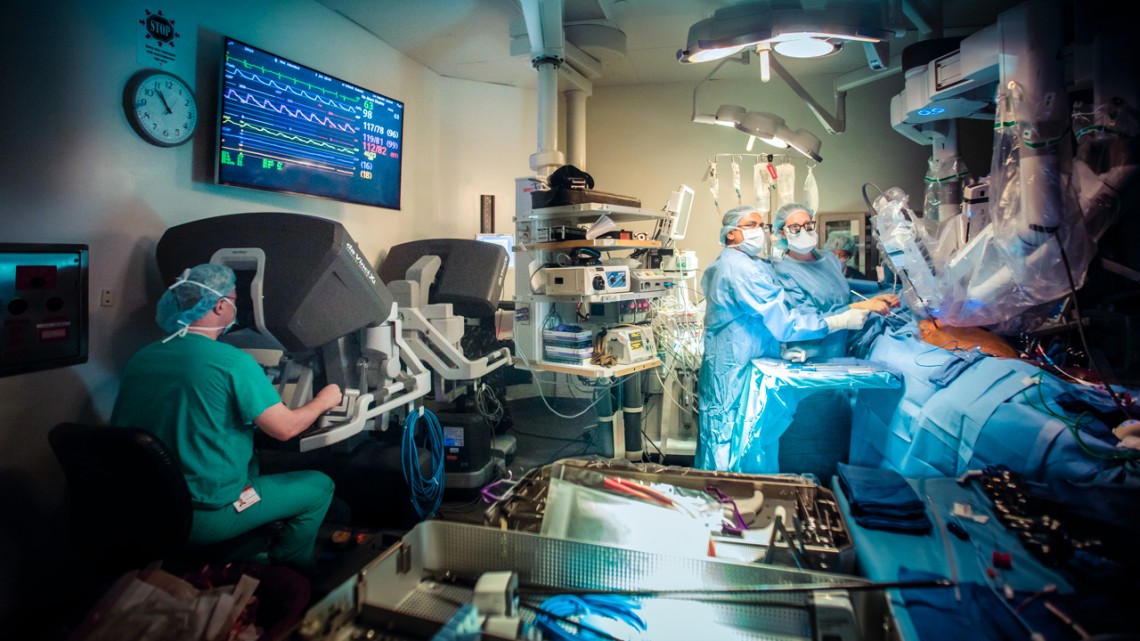
France 2030 medical device funding is a major public investment opportunity for teams developing implantable medical devices and next-generation surgical robotics. Managed via Bpifrance under the France 2030 investment plan, the programme is built for late-stage innovation: technologies that already work in validated settings but still need funding to reach real-world deployment. If your project sits at TRL 4–6 and can credibly progress to TRL 7–9 within the project period, this call can finance the difficult middle stretch industrial research, experimental development, scale-up, and market readiness a level that most private funding will not cover. This guide explains how to apply, what qualifies, how the funding is structured, and how evaluation decisions are made.
Why France 2030 Medical Device Funding Matters Now
Medical device innovation is hitting a familiar bottleneck: prototypes are improving, but industrialisation, clinical integration, and cost-credible deployment are increasingly expensive. France 2030 medical device funding targets exactly this gap. With projects exceeding €4 million, durations up to 48 months, and explicit support for both industrial research and experimental development, it is designed for organisations ready to move beyond “promising” and into “deployable”. For applicants, the practical question is no longer whether the technology is interesting it is whether the project can demonstrate readiness, compliance, and a credible route to adoption in France and beyond.
Who Is Eligible for France 2030 Medical Device Funding

France 2030 medical device funding is not open-ended. Before investing time in consortium building or proposal writing, applicants should confirm that their project meets the core eligibility conditions. These criteria are applied strictly and are often the main reason otherwise strong proposals are filtered out early.
Technology Readiness Levels: From TRL 4–6 to TRL 7–9
To qualify for France 2030 medical device funding, projects must already be based on validated prior work at TRL 4–6 and must be designed to progress toward TRL 7–9 during the funded period.
This requirement is explicitly defined in the official Order approving the call and is consistently enforced during evaluation.
In practical terms, eligible projects typically include:
- Advanced medical device prototypes validated beyond laboratory conditions
- Pre-industrial demonstrators showing system-level integration and performance
- Clinical-grade systems approaching regulatory and market readiness
The programme supports industrial research and experimental development, not exploratory science. Projects that are still conceptual, theoretical, or limited to early proof-of-concept are considered too immature for this funding instrument.
France 2030 funding is aimed at technologies that already function. The challenge is no longer invention, but robustness, scale, and deployment.
Eligible Technology Scope: Implantable Devices and Surgical Robotics Only
Under this call, France 2030 MedTech funding is limited to two technology categories.
Implantable Medical Devices
Projects must demonstrate disruptive advances, not incremental optimisation, in at least one of the following areas:
- Materials or biomaterials
- Functional performance
- Long-term safety, durability, or reliability
Surgical Robotics
Projects must deliver measurable improvements in at least one of the following dimensions:
- Surgeon–patient interface
- Mechatronics, precision, or control systems
- Procedure planning or surgical workflow
- Modularity and procedural versatility
- Learning curve reduction or accessibility
Incremental upgrades to existing systems are unlikely to be competitive. The evaluation focus is on step-change capability, not refinement.
Project Size, Duration, and Location Requirements
To be eligible for France 2030 medical device funding, projects must meet all of the following conditions:
- Total project budget exceeding €4 million
- Maximum project duration of 48 months
- Project activities carried out in France
- No project work initiated prior to submission
As a result, the call automatically excludes:
- Small feasibility or pilot studies
- Retrospective funding requests
- Projects without a meaningful French operational footprint
Consortium Rules for Large Companies
Large companies cannot apply on their own under this call.
They may only participate as part of a consortium of up to six partners, typically combining:
- Industrial partners
- SMEs or start-ups
- Research organisations or academic laboratories
This is a structural requirement, not a procedural formality. Consortia are expected to reflect how the technology will be developed, validated, and brought to market in practice.
How France 2030 Medical Device Funding Is Structured
One of the most common reasons applications underperform is a basic misunderstanding of how France 2030 medical device funding is paid and what that structure is designed to test.
This programme does not function like a traditional research grant. It is a co-investment mechanism, deliberately built to support late-stage medical technologies while enforcing commercial and industrial discipline.
Funding Allocation by Applicant Type
Under the France 2030 programme, funding is allocated differently depending on the role of each partner within the project.
Research Organisations: Grant-Based Support
Public research organisations including laboratories, universities, and academic institutes receive funding in the form of grants. These funds are non-repayable and reflect the public-interest role of research bodies in advancing medical science, translational research, and technical validation.
This component recognises that research partners contribute knowledge, infrastructure, and scientific credibility rather than commercial return.
Companies: Subsidies and Repayable Advances
Companies participating in France 2030 medical device funding projects are supported through a split funding mechanism:
- 50% non-repayable subsidy, and
- 50% repayable advance, reimbursed if the project leads to defined commercial outcomes
This is not a penalty. It is intentional design.
The repayable portion aligns public funding with market success, while the subsidy component absorbs a significant share of late-stage development risk particularly during industrialisation, validation, and scale-up phases where private capital is often most cautious.
Why the Funding Model Matters in Practice
This funding structure serves three strategic purposes.
First, it enables ambition. France 2030 MedTech funding underwrites development phases that are often too capital-intensive or too risky for conventional investors.
Second, it forces early realism. Applicants must think in practical terms about manufacturing, pricing, reimbursement, and adoption from the outset not as an afterthought.
Third, it filters projects. Technologies that are scientifically elegant but commercially implausible tend to struggle under this model. Projects with a credible route to market, by contrast, are rewarded.
Key insight: France 2030 medical device funding favours teams that treat public support as co-investment in a future product, not as research income.
Understanding this distinction early is critical. Projects framed primarily as research programmes often underperform. Projects framed as deployable medical solutions with shared public–private risk tend to score far higher.
Programme Governance and Administration
France 2030 medical device funding is administered by Bpifrance under the national France 2030 framework. Funding decisions reflect both technical evaluation and strategic alignment with national and European healthcare priorities.
Non-Technical Evaluation Criteria That Decide Outcomes
In France 2030 medical device funding, technical excellence is assumed.
It is not, on its own, decisive.
What often separates shortlisted projects from rejected ones is everything around the technology: environmental credibility, market realism, and evidence that the innovation can withstand real-world constraints beyond the laboratory.
This is where many otherwise strong proposals fail.
Environmental Compliance: “Do No Significant Harm” Is a Systems Test
All applicants must demonstrate alignment with the Do No Significant Harm (DNSH) principle. In practice, evaluators treat this requirement as far more than an environmental declaration.
Projects are expected to address, concretely:
- Manufacturing impact: energy consumption, waste streams, process scalability
- Materials sourcing: availability, sustainability, and dependency risks
- Lifecycle considerations: durability, reprocessing, servicing, and end-of-life
Generic sustainability language is routinely rejected. What scores well is specificity: trade-offs acknowledged, constraints explained, and mitigation strategies grounded in engineering and industrial reality.
In this call, DNSH compliance functions as a proxy for systems thinking. Teams that have not considered lifecycle and manufacturing implications are often judged to be insufficiently prepared for scale.
Markets Beyond France: Export Readiness as Proof of Robustness
Another frequent failure point is market definition.
France 2030 funding for medical devices explicitly requires applicants to articulate target markets beyond French institutional buyers. This is not about optimism or ambition. It is about plausibility.
Projects must clearly explain:
- Which non-French markets are targeted
- Why the technology fits those healthcare systems
- How regulatory, reimbursement, or adoption barriers differ across countries
Exportability is not treated as a commercial add-on. It is treated as a stress test.
A medical device that only functions within a uniquely French reimbursement or procurement context is often viewed as fragile. One that can adapt across European or international systems is seen as structurally stronger.
Key insight: In this programme, international relevance is used as a surrogate marker for scientific, economic, and operational resilience.
Projects that underperform at this stage are rarely rejected for lack of innovation. They are rejected because they fail to demonstrate that innovation can survive manufacturing reality, environmental scrutiny, and cross-border adoption.
For applicants, addressing these criteria early and explicitly is often the difference between technical approval and strategic rejection.
How Applications to France 2030 Actually Move Through the System
On paper, applying for France 2030 medical device funding looks straightforward. In practice, the process reveals a great deal about how prepared a project really is.
All applications are submitted through a single official route, administered by Bpifrance under the national France 2030 framework. There are no parallel channels, informal submissions, or back doors. What you submit and when you submit it is what gets evaluated.
That simplicity is intentional.
The application platform is designed to surface unresolved questions early: unclear consortium roles, immature industrial plans, or projects that are still negotiating their own internal logic. Teams that struggle at this stage often discover that the difficulty is not administrative, but structural.
Deadlines as a Signal, Not a Formality
The programme operates with two fixed submission points:
- Intermediate submission window: 10 February 2026
- Final submission deadline: 6 October 2026
Late submissions are not reviewed.
Incomplete submissions are not rescued.
This rigidity can feel unforgiving, but it serves a purpose. In France 2030, timing is treated as a proxy for readiness. Projects that miss deadlines often reveal deeper issues: consortia that are not yet aligned, development plans that are still moving targets, or funding narratives that have not been fully agreed internally.
From an evaluator’s perspective, a project that cannot stabilise its proposal by the deadline is unlikely to stabilise its technology within 48 months.
What the Platform Really Tests
Beyond document upload, the application process quietly tests whether a project can:
- Translate technical ambition into structured, reviewable claims
- Align multiple partners around a single development narrative
- Present industrial, environmental, and market logic as a coherent whole
This is why experienced applicants treat submission not as a final step, but as a stress test of project maturity.
In France 2030, the application process is part of the evaluation. Projects are judged not only on what they propose to build, but on how clearly they can already explain it.
Why This Matters More Than It Appears
France 2030 medical device funding is designed for technologies approaching deployment. The submission process reflects that philosophy. It rewards teams that have already done the difficult internal work aligning partners, locking assumptions, and committing to a defined development path.
For applicants, respecting the process and the calendar is less about compliance, and more about signalling that the project itself is ready to move.
What Successful France 2030 Medical Device Projects Have in Common
Across France 2030 medical device funding calls, a consistent pattern emerges. Projects that succeed are rarely the most futuristic, the most complex, or the most ambitious on paper. They are the ones that appear ready.
Not finished.
Not risk-free.
But internally coherent, externally plausible, and grounded in how healthcare systems actually operate.
A Clear Development Trajectory, Not Aspirational Language
Winning projects articulate a precise trajectory from where the technology is today to where it needs to be at the end of the programme. They are explicit about what will change, what will be validated, and what risks remain.
They do not rely on broad claims of “innovation” or “disruption.” Instead, they explain what becomes possible at TRL 7, then at TRL 8, then at TRL 9 and why that progression is credible within 48 months.
Evaluators tend to favour clarity over ambition.
Industrial Constraints Are Integrated Early
Successful applicants do not treat industrialisation as a downstream problem. Manufacturing, sourcing, assembly, and quality systems appear early in the project narrative, even when the technology is still evolving.
This does not mean everything is fixed. It means the team understands where constraints will arise and has already begun to design around them.
Projects that postpone these questions often struggle to convince evaluators that scale will be achievable within the programme window.
Clinical Adoption Is Treated as a Design Variable
Projects that score well do not assume clinical uptake. They design for it.
They show awareness of:
- Surgical workflow and training burden
- Integration into existing hospital infrastructure
- Behavioural and organisational friction
Rather than presenting clinical adoption as a future benefit, they treat it as a present constraint that shapes the technology itself.
The Value Proposition Is System-Level, Not Technical
Another recurring feature of strong proposals is a clear understanding of who benefits and how.
Successful projects demonstrate how the technology reduces:
- Cost
- Complexity
- Risk
- Or resource pressure
for healthcare providers, not just how it improves performance metrics in isolation.
This system-level framing matters because France 2030 medical device funding is judged against public value, not novelty alone.
Finally, winning consortia tend to look less impressive on paper and more functional in practice.
Partners have defined roles.
Responsibilities are clear.
Interfaces between organisations are thought through.
Rather than assembling prestige names, successful teams assemble working structures that mirror how the product will actually be developed, validated, and brought to market.
France 2030 medical device funding does not reward ideas waiting to be discovered. It rewards teams that already behave like system builders.
Projects that succeed are those that show quietly but convincingly that the hardest thinking has already been done.
Not about whether the technology could work.
But about whether it is ready to leave the laboratory and survive the world it is entering.
References
- French Prime Minister
Arrêté du 29 octobre 2025 portant approbation du cahier des charges de l’appel à projets « Soutien aux innovations de rupture dans la filière des dispositifs médicaux implantables et de la robotique chirurgicale », Journal Officiel de la République Française, publié le 1er janvier 2026 (NOR : PRMI2422871A). - Legifrance
Journal Officiel texte réglementaire approuvant le cahier des charges du programme France 2030 pour les dispositifs médicaux implantables et la robotique chirurgicale. - Bpifrance
Appel à projets Grands Défis – Soutien aux innovations de rupture dans la filière des dispositifs médicaux implantables et de la robotique chirurgicale, Programme France 2030, documentation officielle et plateforme de dépôt. - France 2030
Plan d’investissement France 2030, volet santé et dispositifs médicaux démonstration en conditions réelles, industrialisation et premières mises sur le marché. - European Commission
Technology Readiness Levels (TRLs): Guidance for Medical and Health Technologies, cadre de référence européen pour l’évaluation de la maturité technologique (TRL 1–9). - European Commission
Do No Significant Harm (DNSH) Principle, cadre environnemental appliqué aux financements publics européens, y compris les programmes d’innovation santé. - OECD
Translating Innovation in Health Systems: From Research to Market, analyses sur les goulets d’étranglement entre recherche, industrialisation et adoption clinique. - McKinsey & Company
The Next Wave of Surgical Robotics, analyse sectorielle sur les défis d’industrialisation, d’accessibilité économique et d’adoption clinique des robots chirurgicaux. - MedTech Europe
Innovation Pathways for Implantable Medical Devices, position paper sur les exigences réglementaires, industrielles et économiques pour les dispositifs implantables en Europe. - World Health Organization (WHO)
Medical Devices: Managing the Mismatch, rapport de référence sur l’adéquation entre innovation technologique, systèmes de santé et capacités de déploiement.
FAQ: France 2030 Medical Device Funding Real Questions, Straight Answers
Is France 2030 medical device funding competitive?
Yes and increasingly so. This call is not oversubscribed with weak ideas, but it is crowded with technically credible projects. What differentiates winners is not novelty, but readiness: clarity of development path, realistic industrial planning, and a convincing case that the technology can actually be deployed at scale.
What is the most common reason good projects fail?
Most failures are not technical.
They happen because projects underestimate:
- industrialisation complexity,
- consortium coordination, or
- the credibility of their market and export story.
Evaluators routinely reject projects that “work” technically but feel unfinished as systems.
Does my company need to be French to apply?
No but the work must be carried out in France, and the project must have a real French operational footprint. Shell entities or nominal French partners with no substantive role are usually detected and penalised during evaluation.
Can a start-up realistically lead a €4m+ France 2030 project?
Yes and many do.
But successful start-ups typically lead as integrators, not as lone inventors. They build consortia that compensate for what they do not yet have: manufacturing capability, clinical validation environments, or regulatory depth.
How strict are the TRL requirements in practice?
Extremely strict.
If evaluators cannot clearly map your starting point to TRL 4–6, and your endpoint to TRL 7–9, the project will struggle. Vague claims like “approaching clinical readiness” without concrete validation evidence are a common red flag.
Is this programme really about innovation, or about industrial policy?
Both deliberately.
France 2030 medical device funding supports innovation that strengthens domestic industrial capability. Technologies that rely on fragile supply chains, non-scalable materials, or implausible manufacturing assumptions often score poorly, regardless of technical elegance.
How seriously is the “Do No Significant Harm” (DNSH) criterion taken?
More seriously than many applicants expect.
DNSH is not treated as a sustainability paragraph; it is treated as a design question. Projects that cannot explain lifecycle impact, sourcing trade-offs, or end-of-life handling are often seen as insufficiently mature.
Do we need confirmed customers or hospitals to apply?
Not always but you do need credible adoption logic.
Projects that can point to engaged clinicians, pilot sites, or structured pathways into hospitals tend to score higher than those relying solely on future intent or generic letters of interest.
What does the repayable advance actually mean for companies?
It means the State expects some return if the project succeeds commercially.
In practice, this pushes companies to think early about pricing, reimbursement, and scale. Teams that ignore this and treat the funding as a grant often run into trouble later in both evaluation and negotiation.
Is it a problem if the technology is still evolving?
No evolution is expected.
What evaluators look for is controlled evolution: clear hypotheses, defined validation steps, and an understanding of what must be fixed versus what can remain flexible. Unbounded exploration is what raises concern.
Should we apply in February or wait until October?
There is no universal answer.
Projects that apply early tend to be more mature and more stable. Waiting can make sense if key elements consortium structure, industrial partner commitments, or validation data are genuinely not ready. Submitting too early with unresolved fundamentals is usually worse than waiting.
France 2030 medical device funding does not reward the smartest idea in the room.
It rewards the team that already behaves as if the idea is going to be built, regulated, manufactured, and used and can prove it on paper.
Glossary of Terms
Bpifrance
France’s public investment bank, responsible for administering France 2030 funding programmes, including evaluation, contracting, and payment of medical device innovation grants and advances.
Clinical-grade system
A medical device or robotic system developed to a standard suitable for clinical validation or early deployment, incorporating quality controls, safety considerations, and regulatory alignment beyond laboratory prototypes.
Consortium
A structured partnership between multiple organisations typically companies and research institutions collaborating on a single funded project. Under France 2030, large companies must participate within a consortium.
Deployable technology
A medical device or robotic system designed not only to function technically, but to integrate into real healthcare settings, including manufacturing, regulation, reimbursement, and clinical workflow.
DNSH (Do No Significant Harm)
An environmental principle requiring funded projects to demonstrate that they do not cause significant harm across their lifecycle, including manufacturing, materials sourcing, use, and end-of-life management.
Experimental development
A development phase focused on refining, validating, and scaling existing technologies toward market readiness, as distinct from early research or exploratory science.
Exportability
The ability of a medical technology to be adopted beyond its home country, reflecting regulatory compatibility, economic viability, and adaptability to different healthcare systems.
France 2030
A national investment plan launched by the French government to strengthen industrial, technological, and healthcare innovation across strategic sectors, including medical devices and surgical robotics.
Industrial research
Applied research aimed at resolving technical uncertainties, improving performance, or validating design choices in preparation for industrialisation and market entry.
Implantable medical device
A medical device intended to be placed inside the human body, often for long-term use, requiring high standards of biocompatibility, durability, and safety.
Late-stage innovation
Technology development focused on moving validated systems toward real-world deployment, typically involving scale-up, industrialisation, clinical validation, and regulatory readiness.
Market-ready system
A technology that has reached sufficient maturity to enter clinical use or commercial deployment, even if final regulatory approvals or reimbursement pathways are still in progress.
Pre-industrial demonstrator
An advanced prototype that integrates multiple system components and operates under conditions close to real use, serving as a bridge between laboratory development and industrial production.
Public co-investment
A funding model in which public funds share risk with private actors, supporting development while expecting commercial discipline and, in some cases, financial return.
Repayable advance
A form of public funding that must be repaid if a project achieves defined commercial success, used to align public investment with market outcomes.
Surgical robotics
Robotic systems designed to assist or enhance surgical procedures, including interfaces, control systems, and planning tools that support surgeon performance and patient outcomes.
Technology Readiness Level (TRL)
A scale from 1 to 9 used to assess the maturity of a technology, where TRL 4–6 indicates validated prototypes and TRL 7–9 indicates systems approaching or achieving market deployment.
Translational innovation
The process of converting scientific and technical advances into practical medical products that can be adopted within healthcare systems.
Sources :
https://www.economie.gouv.fr/dgccrf/Publications/Vie-pratique/Fiches-pratiques/Dispositifs-medicaux#:~:text=Lunettes%2C thermomètres%2C préservatifs%2C pansements,médicaux pour leur usage quotidien.
https://www.economie.gouv.fr/france-2030-developper-produire-dispositifs-medicaux#:~:text=Les chiffres clés du secteur,euros de chiffre d’affaires.
Implants and Prosthetics. 2019. U.S. Food & Drug Administration. Available at: https://www.fda.gov/medical-devices/products-and-medical-procedures/implants-and-prosthetics
Implanted Medical Device. 2020. Science Direct. Available at: https://www.sciencedirect.com/topics/engineering/implanted-medical-device
Implantable Medical Devices. 2015. American Heart Association. Available at: https://www.heart.org/en/health-topics/heart-attack/treatment-of-a-heart-attack/implantable-medical-devices
Leading Medical Device Companies in 2020. 2021. University Lab Partners. Available at: https://www.universitylabpartners.org/blog/leading-medical-device-companies-2020